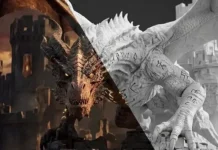

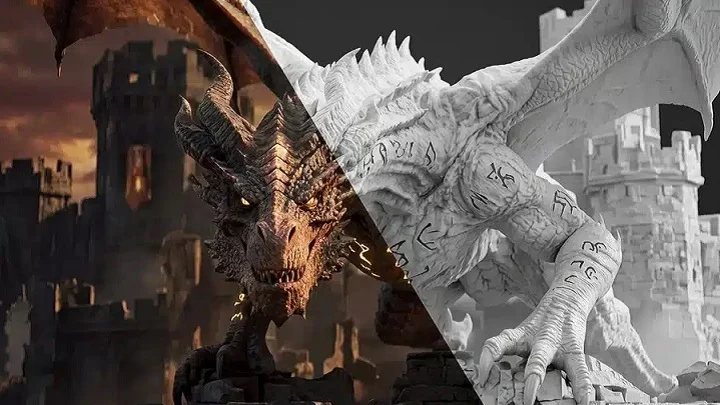
Brasil Game Show 2026 (BGS 2026) took place from October 9th to 12th at Distrito Anhembi, in São Paulo. Among the exhibitors was the booth for TRIPO AI, a company featuring a tool focused on generating 3D models using generative AI. Very accessible to use, it can be utilized to create characters, animations, models for 3D printers, and even digitize an image into a digital version.
During the event, we had the opportunity to interview Steven Xu, Product Manager at TRIPO AI. Check out our conversation:
Check out the interview!
[O Megascópio]: How did the idea to develop the tool come about? And what was the biggest challenge in starting to develop this idea?
[Steven Xu]: The idea behind TRIPO originated as a way to lower the barriers to entry when using tools for creating 3D models—allowing people to develop their projects and bring them into the real world. That is the original concept behind the TRIPO project. As for the challenges, the first is the technical aspect of product development—for instance, the efforts required for interactions with the algorithm and its usability. This point is crucial and needs to be well-crafted because it forms the foundation of the product.
Another challenge is understanding user needs and requirements. Using TRIPO, we have developers, creators, and animators, as well as 3D printing projects. This broad range encompasses both the gaming industry and other branches of entertainment, making user requirements an important area of focus to cater to different scenarios.
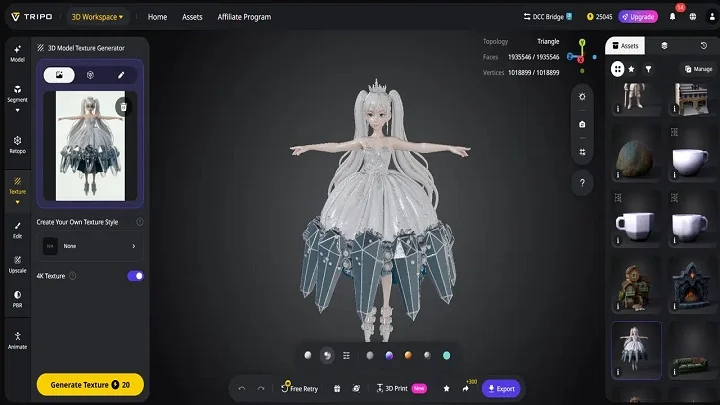
[O Megascópio]: When talking about the tool, we saw that we can develop models ranging from characters and their animations to objects that make up environments, as well as transforming 2D into 3D. Does TRIPO have any limitations when it comes to porting generated assets into game engines?
[Steven Xu]: We have a tool called the ECC Plugin, ECC Bridge, for our ECC software. This tool allows us to send our files to other platforms, provided they meet guaranteed quality standards. Yes, there is a special connection between TRIPO and all ECC software. This plugin helps developers connect what they want directly to game engines and development environments. It means there is no loss of quality or key factors. In terms of limitations—what are the limitations? None. There is no limit to the assets you can extract and port between engines.
[O Megascópio]: How do you evaluate the reception from studios and individuals using TRIPO Studio? And what about the visitors at BGS?
[Steven Xu]: At the moment, I think for B2B users, many game development studios have already used our products. The reception has been very positive. For B2C users, my personal experience is that they pick it up very quickly. They test our products quite thoroughly, and even if it is their first time using TRIPO Studio, they are very pleased with the results—especially with our animation features and how simple it is to generate them. I consider that a very positive reception.
At BGS, we noticed two different types of audiences and users visiting our booth. One is B2B, such as game studios or small companies. We were happy to see that some of them were already using TRIPO Studio; they were already familiar with TRIPO Studio when they visited our booth. They were delighted to see the updated features and the latest product developments. The other part of the audience consists of B2C clients, such as general consumers or individual users. We are very pleased to see that they were able to access and learn the product very easily and quickly. That way, they can build the object they want in no time. And they are satisfied and very happy with the new TRIPO product.
[O Megascópio]: Nowadays, we need to address some sensitive and important topics when discussing generative AI: copyright. When someone creates something from scratch using TRIPO Studio, does it offer any protection, or is it up to the artist to register the work and take the necessary precautions?
[Steven Xu]: For users, the assets they create can be viewed publicly or kept private. In this way, they have a form of protection for their content. As for the usage of their content: if it is just a hobby, personal, or individual use, that is fine. However, for commercial use, a commercial license is required. Therefore, you must have the proper assets and permissions to use them commercially. So, that is the care we take regarding intellectual property, along with careful monitoring and restrictions when sensitive content is involved, in which cases notifications are issued. Other examples include the use of historical figures, celebrities, or sensitive materials. There will be a system notification alerting users to this type of sensitive content.
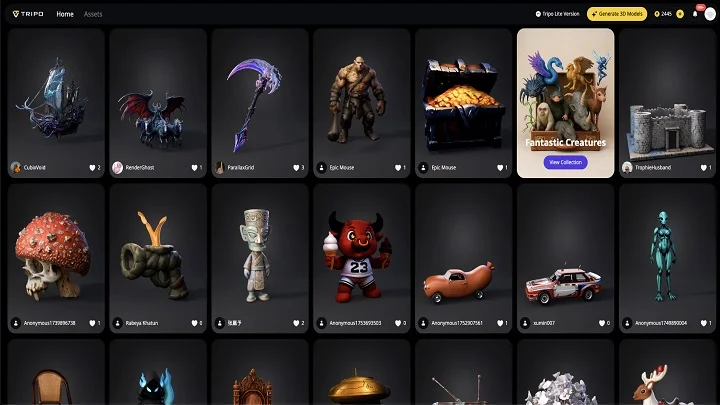
[O Megascópio]: And what is the next step that could be implemented or created in the tool?
[Steven Xu]: The next step will focus on the development of AI agents. This way, agents will be able to help users save much more time and also collaborate across different modules within TRIPO. Because when you try out the product, you see different parts—when you build something, you start from an initial point and then move through rigging, animation, and all these distinct modules. If you have an agent, you can organize the workflow quickly and streamline the job. Therefore, the next step for TRIPO, in terms of product development, will be implementing agents.
I think we can add more depth to this as well. For example, making our agents smarter than other 3D agents by basing them on individual workflows. You can create a scene using someone else’s workflow and then make some custom adjustments. Then, you can share it with the community and make it your own development. We highlight agents that can leverage other people’s workflows to optimize their own, providing plenty of ideas, inspiration, and smarter interactions. The main focus here is the workflow itself.
With agents, users will be able to build entire game environments or scenes collaboratively and holistically, rather than just individual parts or characters. For instance, developing a theme, a weapon, or an item is currently a very isolated and scattered process. But with agents, the ability to build a complete suite makes the process much more efficient. You get a much more hands-on experience, even if you are just creating assets for a game. I think that is the key advantage of agents.